
Commercial property owners face a retirement income problem that most financial planners are not equipped to solve. The standard advice assumes a 401(k), a nest egg, and a withdrawal strategy. Owners of commercial real estate built their wealth a different way. The building was the plan. This article walks through what that means at retirement: why the standard withdrawal math falls short, what selling actually costs in real dollars, and how to position that asset to generate income for the next chapter without triggering a tax bill that erases decades of equity.
What the Cash Flow Problem Actually Looks Like
Social Security provides a base layer of retirement income, but it was not designed to cover the full picture. The gap between average annual expenses and what Social Security provides is the number that retirement planning has to solve.
That $36,000 annual gap has to come from somewhere. For most Americans it comes from a retirement account or investment portfolio. Commercial property owners have built something more tangible: a real asset generating real income. The question at retirement is how to make that asset work as efficiently as possible for the next chapter.
Why the Standard Retirement Math Does Not Apply
The 4% rule is a widely cited retirement planning guideline holding that a retiree can withdraw 4% of an investment portfolio annually with a low probability of exhausting it over a 30-year retirement. To close that $36,000 gap through savings withdrawals alone using that benchmark, a retiree needs approximately $907,000 invested.
Most owners who concentrated capital in real estate rather than a 401(k) did not build that balance, and did not need to. The building was doing the work. The question at retirement is how to keep it working without the management burden that comes with direct ownership.
What Selling Your Building Actually Costs
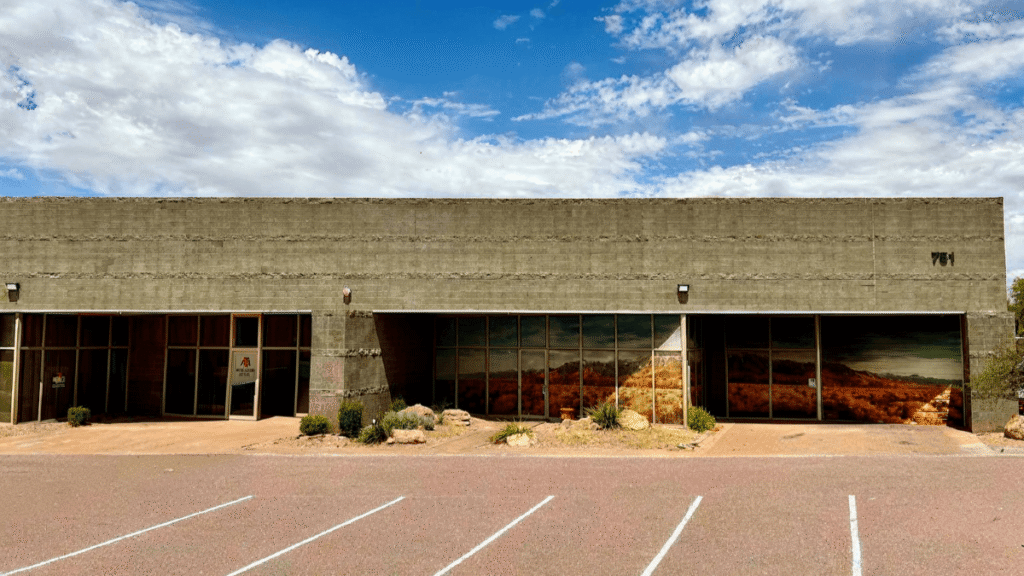
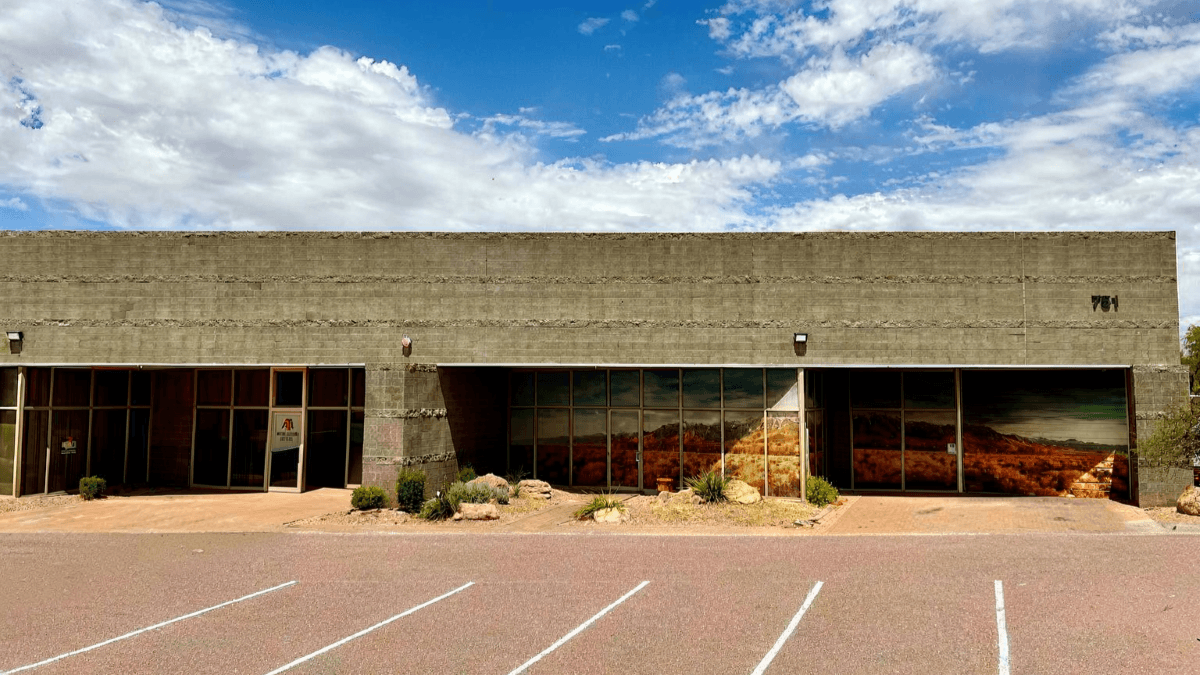
Consider an owner who purchased a 20,000 SF commercial building in 1998 for $800,000. The building is now worth $3,200,000. He has claimed depreciation over the years and is considering a sale. Transaction costs are deducted at closing. Federal and state taxes on the gain are typically due the following April. The following illustrates what those combined costs look like.
| Cost Component | Estimated Amount |
|---|---|
| Federal Capital Gains Tax | $480,000 |
| Depreciation Recapture Tax | $111,000 |
| Net Investment Income Tax (NIIT) | $91,200 |
| Arizona State Income Tax | $60,000 |
| Closing Costs | $224,000 |
| Total Cost of Selling | $966,200 |
Assumes 20% federal capital gains rate, 25% depreciation recapture on building value only (assumes 80/20 building/land allocation; land is not depreciable), 3.8% NIIT, 2.5% Arizona state income tax, and 7% closing costs. Actual land/building allocation varies by property. Consult a qualified tax advisor regarding your specific situation.
After taxes and transaction costs, a $3,200,000 sale produces approximately $2,233,800 in net proceeds. Here is what that means for annual income compared to keeping the asset.
No real estate exposure. No appreciation upside.
Real estate exposure maintained. Appreciation continues.
Figures are illustrative based on example property assumptions. Annual gross income figures represent property-level gross income before fees, operating expenses, and debt service. Owner distributions depend on partnership terms. Actual results vary by asset, market, and structure.
The Case for Keeping the Asset
Selling converts a productive asset into a depleting one. A portfolio governed by the 4% rule shrinks with every withdrawal. A stabilized commercial building with a long-term tenant generates rent regardless of what equity markets do. Property income does not move with the S&P 500. Retirees who experience poor market returns in the first five years of withdrawals and do not adjust spending are far more likely to exhaust their savings. A building does not have that problem.
The objection is management. A building that requires your attention, your phone calls, and your capital decisions is not a retirement asset. It is a job with real estate attached to it. That objection is real. The solution is not selling. It is changing how the asset is held and who is running it.
What a Partnership Structure Actually Changes
A partnership structure transfers the management burden without transferring the asset. The property is contributed to a partnership. A professional operating partner executes the leasing strategy, manages capital improvements, and handles day-to-day operations. When capital improvements require additional funding, that responsibility shifts to the partner. The income continues. The tax event does not occur. The owner moves from active to passive without giving up the equity position they spent decades building.
Here is what that shift looks like across the dimensions that matter most at retirement.
Tax deferral at contribution is subject to individual circumstances and structure. Consult a qualified tax advisor before making any decisions.
The Concentration Risk Question
Any commercial property held as a single asset carries concentration risk. All of the income, all of the appreciation, and all of the exposure sit in one building. If the property underperforms, whether through vacancy, a major capital event, or a softening local market, there is no other asset in the portfolio to absorb it. This is true regardless of how many tenants occupy the building or how you hold the asset. The relevant question is whether that concentration is being actively managed through lease structure, tenant relationships, and repositioning expertise. An owner managing this alone absorbs the full weight of that risk. A partnership with a dedicated operating team has more tools to address it: proactive lease renewals, access to tenant relationships, capital available for improvements that retain and attract tenants, and the experience to see vacancy risk before it materializes.
The same logic applies to portfolio income in retirement. Real property income generally does not move with equity markets. A stabilized building with a long-term lease generates rent in years when stock portfolios decline. Whether that stability persists depends on tenant quality, lease terms, and local market conditions.
What to Do Now
For most owners, the starting point is running the real numbers on what a sale would cost. Federal taxes, depreciation recapture, NIIT, state income tax, and transaction costs together could consume up to 30% or more of gross sale proceeds. That figure changes the conversation significantly. If estate planning is also a consideration, how you hold the asset matters as much as what you have built.
The right path depends on your property, your basis, your income needs, and your timeline. A qualified tax advisor and an experienced real estate partner can help you evaluate the options specific to your situation. We are happy to start that conversation.
If you have spent years accumulating real estate, let us show you what a partnership structure could look like.
We work with long-term industrial property owners across the Southwest who want to protect what they have built and pass it on without the tax bill. We are happy to have that conversation.
Visit aridpartners.com